
Rising stressed debt and past exposures like Reliance Capital, Yes Bank push EPFO to frame exit rules for its portfolio.

Isha Ambani, a director on the board of Jio Platforms, revealed that a failed attempt to upload a college assignment in 2009-10 due to poor internet connectivity in Mumbai sparked the idea and subsequent conversations that led to the creation of Jio.

Indian benchmark equity indices, Sensex and Nifty, closed lower for the fourth consecutive session, driven by a surge in crude oil prices above USD 114 per barrel due to escalating tensions in West Asia, coupled with broad-based selling and FII outflows.

Indian equity benchmarks Sensex and Nifty extended their losses for a third consecutive session, with the Sensex declining 460.30 points and the Nifty dropping 123.70 points, primarily due to surging crude oil prices driven by escalating tensions in West Asia and weak global cues.

Indian benchmark stock indices, Sensex and Nifty, rallied significantly, with Sensex jumping over 1,500 points and Nifty reaching a nearly three-week high, driven by strong buying in banking, IT, and Reliance Industries stocks, alongside easing crude oil prices.
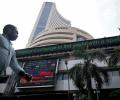
Indian equity benchmarks, the Sensex and Nifty, opened higher on Friday, driven by a strong rally in IT stocks, despite a significant overnight decline in US technology shares and broader Asian markets. Experts anticipate further market support from falling US bond yields, a strengthening rupee, and a substantial liquidity inflow following the Jio Platforms IPO allotment. Track

The combined market valuation of four of India's top-10 most valued firms eroded by Rs 87,960.29 crore last week, with Bharti Airtel experiencing the largest decline, amidst a bearish trend in the equities market.

The combined market valuation of five of India's top-10 most valued firms eroded by Rs 1 lakh crore last week, with IT giant Tata Consultancy Services (TCS) experiencing the largest decline amidst a bearish trend in domestic equities.

Indian benchmark indices, Sensex and Nifty, saw an early rebound after significant losses, driven by value buying, though elevated oil prices and anticipation of the US Federal Reserve's policy decision tempered gains. Track Sensex, Nifty on September 16.

The Indian stock market experienced a significant downturn, with the Sensex crashing over 1,000 points and the Nifty hitting a fresh 52-week low, driven by sustained selling from foreign institutional investors, the RBI's monetary policy tightening, and elevated Brent crude prices.

The benchmark BSE Sensex rebounded by 362 points, ending a four-day losing streak, driven by strong buying in metal, private banking, and oil and gas shares, while the broader NSE Nifty saw modest gains despite paring some advances in the closing session.


Newly listed companies Vedanta Aluminium Metal, SBI Funds Management and Manipal Health Enterprises have entered the Rs 1 trillion mcap list since March 2026.

The Congress party has criticised the government's recent notification regarding UPI transactions, alleging it paves the way for users to be charged fees, particularly for transactions above Rs 2,000. The party claims the government lacks transparency and questions if the move is to benefit American firms. The government, however, states that charges are necessary for the system's sustainability and infrastructure upgrades, with the Finance Minister clarifying that Merchant Discount Rate (MDR) applies to merchants, not customers.

Congress leader Rahul Gandhi has accused the Modi government of quietly paving the way for imposing fees on UPI transactions, alleging it's a surrender to American pressure. The government's recent notification exempts charges only up to Rs 2,000, sparking concerns that higher value transactions and eventually all UPI payments could incur fees. Finance Minister Nirmala Sitharaman, however, clarified that Merchant Discount Rate (MDR) applies to merchants, not customers, and supports digital infrastructure.

Indian stock markets witnessed a significant rally, with the Sensex climbing 964.58 points and the Nifty reaching 24,330, driven by strong buying in blue-chip stocks, particularly in the IT and banking sectors, amidst optimism over Q1 earnings and a shift towards large-cap investments.

The combined market valuation of four of India's top-10 most valued firms, including State Bank of India, Bharti Airtel, Tata Consultancy Services, and Larsen & Toubro, eroded by Rs 1 lakh crore last week amidst a volatile and range-bound equity market.
Indian benchmark indices Sensex and Nifty extended their winning streak to a fourth consecutive day, driven by strong buying in blue-chip bank stocks and a decline in global crude oil prices. Fresh foreign fund inflows also contributed to the optimistic sentiment in the domestic equity market.

Lenders of debt-ridden Reliance Capital have voted in favour of a resolution plan submitted by Hinduja Group firm IndusInd International Holdings Ltd (IIHL) which made the highest cash offer of Rs 9,661 crore in the second round of bidding. As much as 99 per cent votes were in favour of IIHL as lenders expected to recover cash upfront of Rs 9,661 crore from the Hinduja Group entity, sources said. Besides, sources said cash balance with Reliance Capital (RCAP) of over Rs 500 crore would also go to lenders. So, in all lenders are expected to receive about Rs 10,200 crore for distribution as against Rs 16,000 crore principal secured debt, resulting in 65 per cent recovery for the lenders, sources said.

Reliance Industries Ltd has consistently remained compliant with international sanctions and is expected to adhere to upcoming measures on Russian oil, analysts said, estimating that oil sourced from Russia contributes just 2.1 per cent to its consolidated EBITDA. Reliance operates the world's largest single location refining complex, with more than half of the capacity exclusively dedicated for exports.

Reliance Capital, the financial services arm of Anil Ambani-led Reliance Group, has also listed several other concerns with regard to MXC deal.

Mukesh Ambani, Asia's second richest man, has not drawn a salary from Reliance Industries for the sixth consecutive year, with dividends from his extensive shareholdings serving as his primary source of income.

Reliance Industries is expected to report largely flat performance for its fourth quarter (January-March, Q4) of FY26, with weakness in the oil-to-chemicals (O2C) business and muted retail growth likely to offset steady gains in the telecommunications segment.

The insolvency process of debt-ridden Reliance Capital Ltd (RCL) on Tuesday hit a roadblock as the NCLT Mumbai has stayed the resolution process on the plea of Torrent Group. The stay order was issued by the National Company Law Tribunal (NCLT) as the Ahmedabad-based Torrent Group challenged the revised bid from Hinduja Group, sources said. Torrent Group, which emerged as the highest bidder with an Rs 8,640 crore offer, had moved the NCLT-Mumbai against Hinduja Group's late revised bid, which it had submitted after the completion of the e-auction process on December 21.

Indian benchmark equity indices, Sensex and Nifty, rebounded on Wednesday, recovering intraday losses, primarily driven by strong fag-end buying and a significant rally in blue-chip Reliance Industries.

If we really want to curb the further depreciation of the rupee and make the rupee appreciate, we want to come out of the mindset that the exchange rate is merely a number, bring policy corrections to help reduce the outflow of foreign exchange by imposing suitable tariffs to discourage imports and bring self reliance, discipline FPIs, and correcting rules governing royalty outflows, suggests Dr Ashwani Mahajan, National Co-Convenor, Swadeshi Jagaran Manch.
Anil Ambani-controlled Reliance Capital Ltd is all set to start life insurance business with regulator IRDA approving the acquisition of Chennai-based AMP Sanmar Life Insurance Ltd.
Anil Ambani-controlled Reliance Capital along with Reliance Land Pvt Ltd have acquired 30.55 per cent stake in Adlabs Films.
Reliance Capital has agreed to acquire 100 per cent of the equity share capital of Travelmate Services (India), a wholly owned subidiary of the Kuoni Group

India's market landscape is undergoing significant shifts, with bank-backed brokerages potentially regaining dominance over discount platforms due to regulatory changes and increased taxes, while the IPO pipeline faces a slowdown amid heightened global volatility.

Eight of India's top-10 most valued firms saw their combined market valuation increase by Rs 1,87,497.45 crore last week, with Bharti Airtel emerging as the largest gainer, reflecting a positive trend in the equities market.

In a fascinating battle of ideologies, the well-balanced and bold Royal Challengers Bengaluru will have to subdue a phlegmatic Gujarat Titans to lift their second consecutive IPL title.

A Hinduja Group firm on Wednesday emerged as the highest bidder with an offer of Rs 9,650 crore to take over debt-ridden Reliance Capital in the second round of auction, sources said. The bid by IndusInd International Holdings Ltd (IIHL) is higher than Rs 8,640 crore offer made by Torrent Investments in the first round of auction held in December last year. The other two suitors -- Torrent Investments and Oaktree -- did not participate in the second round of auction, sources said.

Indian benchmark indices Sensex and Nifty experienced declines due to a sharp rally in crude oil prices, continuous foreign fund outflows, and geopolitical uncertainties. Regulatory developments in the banking sector, particularly the implementation of the Expected Credit Loss (ECL) framework, also contributed to the selling pressure.

Tata group firm Trent Ltd on Friday said Anil Ambani-promoted Reliance Capital has bought 8.68 per cent stake in it for Rs 21.2 crore (Rs 212 million), marking ADA Group's entry into the retail sector.
